
Many of the region’s most important buildings require thoughtful renovation strategies that preserve historic character while meeting modern performance standards.
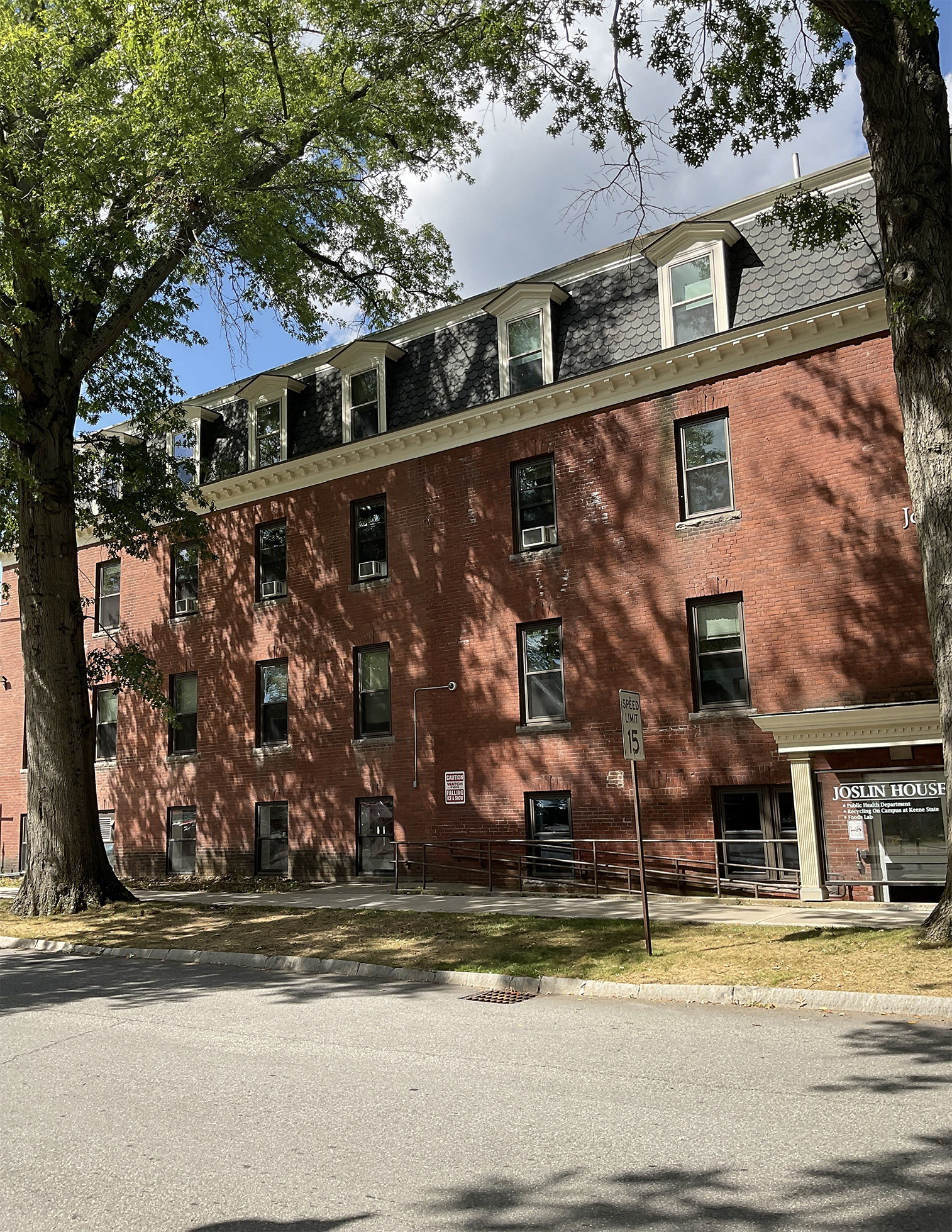
Some of Engelberth’s recent projects include the restoration of the Joslin House at Keene State College, rehabilitation work at the McFarland State Office Building, and the basement restoration at the ASA Bloomer Building.
Joslin House at Keene State College
Although it’s one of the older buildings along Main Street, Joslin House is not listed on the historic registry. Regardless, this building is at one of the main entrances to the college campus, therefore maintaining its historic features is important to the college.
Engelberth was hired to manage the replacement of the wood cornice and the mansard slate roof. The new cornice are fiberglass units premade off-site and applied over wood framing and then painted in place. The new roofing material is a fiberglass shingle to give the appearance of slate without the high cost. The building was fully staged to provide a safe working surface for all parties.
McFarland State Office Building Renovation
A multi-phase renovation project was undertaken, valued at approximately $1,500,000–$3.5 Million, including:
- Phase 1 (Fall 2023): Brick replacements and repointing of the existing brick façade.
- Phase 2: Re-roofing and replacement of associated flashings for all three wings, replacement of penthouse siding, replacement of railings, and modifications to portions of the penthouse interior.
- Phase 3: Repairs to the east wing kitchenette (siding/windows/roof structure), replacement of heat recovery units (HRUs), and other miscellaneous maintenance items.
ASA Bloomer
This is another Vermont State office building located on Merchants Row in Rutland, Vermont with a variety of departments in the three-story structure. The project Engelberth was hired to manage is the removal of a portion of the basement slab, replace / reline an existing sewer pipe, clean out an old stone line culvert under the slab, install under slab venting, install footings for new steel columns and erect new steel beams to support the first-floor framing.
These projects aren’t glamorous but demonstrate the unique challenges associated with working in occupied historic structures. From roofing and façade restoration to structural upgrades and infrastructure improvements, every decision must balance preservation goals with long-term durability helping extend the life of important community assets for future generations.